
Every garage door makes some noise, but a change in sound almost always points to a specific part that's wearing out or has broken. The type of noise, when it happens during the door's travel, and whether it's getting louder all help narrow down the cause.
In the Renton area, including Newcastle, Fairwood, and Kent, the wet winters accelerate wear on metal hardware. Moisture gets into bearings, sits on unlubricated surfaces, and speeds up the deterioration that causes most of the noises below.
Squeaking or Squealing
Dry or worn hinges and rollers are the most common source. The noise is metal rubbing against metal without enough lubrication between the surfaces.
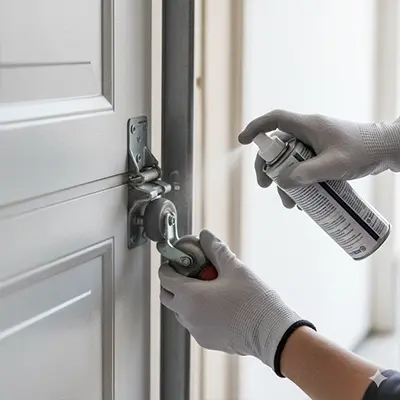
A garage-door-specific lubricant or a silicone spray on the hinges, roller stems, and the top of each spring coil usually stops it within a cycle or two. If the squeaking comes back within a few weeks, the rollers may be worn past the point where lubrication helps and need replacement.
Grinding
The roller bearings have worn out, or the roller is dragging against the inside of the track. This is metal-on-metal contact that's actively wearing parts down.
Steel rollers grind when their bearings seize. Nylon rollers grind when the nylon wears through to the steel stem. Either way, continuing to run the door in this condition accelerates the damage and can score the inside of the track, turning a roller replacement into a more involved repair.
Loud Bang or Snap
A single loud bang, often described as sounding like a gunshot from inside the garage, almost always means a torsion spring has broken. The spring sits on a metal shaft above the door. When it snaps, the stored tension releases all at once.
Stop Using the Door Immediately
A broken torsion spring means the door is no longer counterbalanced. The full weight of the door is unsupported and it can drop without warning. Do not try to open or close it. Call for professional spring replacement.
A broken spring often damages the lift cables when it snaps, so both should be inspected together.
Rattling or Vibration
Loose hardware is the usual cause. The bolts, nuts, and brackets on a garage door absorb thousands of open-close cycles and work themselves loose over time. Check the hinges, roller brackets, and the mounting brackets where the track attaches to the wall and ceiling. A socket wrench and a few minutes can quiet this down.
If the rattling is coming from the opener itself, the mounting hardware connecting it to the ceiling may have loosened, or the chain may have slack in it.
Motor Hums but the Door Does Not Move
The opener is getting power and trying to run, but the drive mechanism is not engaging the door. The most common reason is a stripped gear inside the opener. The motor turns, but the worn gear can't transfer that rotation to the chain, belt, or screw drive. This is an opener repair job, not a door problem.
Another possibility is that the trolley has come disconnected from the carriage, in which case reconnecting it takes a few seconds.
Popping or Snapping During Travel
Popping sounds as the door moves usually come from the torsion spring coils binding and then releasing, or from a roller popping past a dent or bump in the track.
If it happens at the same point in the door's travel every time, it's likely a track issue, a spot where the track has a slight bend or a bracket has shifted. If the popping is irregular and comes from the spring area, the spring coils may need lubrication, or the spring may be reaching the end of its life. A tune-up will identify which.
01 Is it normal for a garage door to make some noise?
Yes. A working garage door produces sound from the rollers moving through the tracks, the chain or belt driving the carriage, and the springs cycling. What to listen for is a change from your door's normal sound, or a noise that's getting louder over time. Both indicate wear that should be checked.
02 When should I stop using my garage door because of a noise?
After a loud bang or snap, stop immediately. That usually means a spring has broken and the door is no longer safely supported. For grinding, rattling, or squeaking, the door is usually safe to operate in the short term, but continuing with worn parts causes more damage over time. Addressing it sooner keeps the repair simpler.
03 Can I tell what is wrong by where the noise comes from?
Often, yes. Noises from the spring area above the door usually involve the torsion spring or the opener's drive mechanism. Sounds from the door's sides typically come from the rollers and tracks. Rattling near the ceiling points to loose opener mounting hardware. Narrowing down the location helps a technician arrive ready with the right parts.
04 Does cold weather make garage door noise worse?
It can. Metal contracts in cold weather, which tightens tolerances in the tracks and roller bearings. Lubricant also thickens, which reduces its effectiveness. The combination makes existing wear more audible. Lubricating before the cold season helps.
Garage Door Making an Unusual Noise?
A noise that changes or gets louder usually means a part is wearing out. We can diagnose it and fix it before it becomes a bigger problem
Serving Renton, Newcastle, Fairwood, Kent, and surrounding areas.