
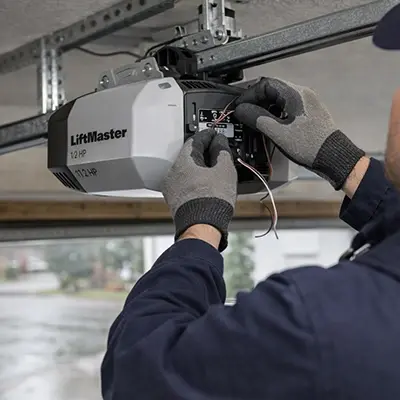
Pull the red emergency release cord hanging from the opener's track to disconnect the trolley from the drive chain or belt. With the trolley released, you can lift the door by hand and close it the same way.
This comes up every autumn around Puget Sound. A windstorm rolls through Renton, Newcastle, Fairwood, and the surrounding foothills. Power goes out and the garage becomes inaccessible. It doesn't have to be. Every residential garage door opener sold in the US has an emergency manual release built in. The steps below walk through how to use it safely.
Find the Emergency Release Cord
The cord is a short red handle hanging from the trolley assembly on the opener's rail, usually about six feet off the ground near the front of the door. Pulling it down disengages the trolley from the opener's drive carriage, which frees the door to move independently of the motor.
Always Pull With the Door Closed
If you release the trolley while the door is open and the springs are worn or broken, the door can drop under its own weight. Always release the cord with the door in the fully closed position, then lift by hand.
Lift the Door by Hand
Grab the door at the bottom edge and lift straight up. A properly balanced door with healthy torsion springs should feel manageable. If the door barely moves or won't stay up on its own, the springs are likely broken or out of adjustment. Stop and call a technician for spring replacement. Operating a door with failed springs risks it dropping suddenly or the cables coming loose.
If you need to leave the door open, a C-clamp or locking pliers on the track just below the bottom roller will keep it from sliding down.
Close and Lock the Door Manually
To close, lift the door slightly to clear any friction, then guide it down evenly. Do not let it free-fall.
Once closed, lock it. Most garage doors have a manual slide lock on the inside, a handle that pushes a metal bar into the track on each side. Use it whenever the opener is disconnected. Without the opener engaged, there's nothing stopping someone from lifting the door from outside.
If your door doesn't have a slide lock, a padlock through one of the track holes above a roller works as a temporary measure.
Re-engage the Trolley After Power Returns
Pull the release cord toward the opener (forward, not down). Then press your wall button or remote. The carriage will travel along the rail and reconnect with the trolley automatically. You should hear a click when it latches.
If the trolley doesn't re-engage, open and close the door by hand once to line the carriage up, then try again. If your remote or keypad lost its programming during the outage, you may need to reprogram it.
Battery Backup Openers
Newer smart and Wi-Fi-connected openers often include a built-in battery backup. When the power goes out, the battery takes over and the door continues to work from the wall button, remote, or phone app. The backup typically lasts long enough to get through most outages.
If you live in an area with frequent outages, such as the wooded corridors around Kent, Maple Valley, and the Renton Highlands, a battery backup opener is worth considering during your next opener replacement. A regular tune-up is also worth scheduling to make sure your springs, cables, and hardware are in good shape before storm season starts.
01 Can I open my garage door from outside during a power outage?
Only if you have a keyed exterior release. It's a lock cylinder mounted on the outside of the door that connects to the emergency release via a cable. Without one, you'll need to enter the garage through another door to reach the release cord.
02 Will pulling the emergency release damage my opener?
No. The release cord is designed for this. It disconnects the trolley from the carriage without affecting the motor, chain, or belt. You can re-engage it as many times as needed.
03 How do I lock my garage door during a power outage?
Use the manual slide lock on the inside of the door. It pushes a horizontal bar into the track on each side and prevents the door from being lifted from outside. If your door doesn't have one, a padlock through a track hole above a bottom roller works temporarily.
04 Should I get a battery backup for my garage door opener?
If you lose power more than a couple times a year, it's worth it. Battery backup openers run the door normally during outages without manual steps. They're standard on most current smart openers and can sometimes be added to existing units.
Stuck During a Power Outage?
If your door won't open manually or feels too heavy to lift, do not force it
Serving Renton, Newcastle, Fairwood, Kent, and surrounding areas.