
If you live near the water, you have probably noticed that things rust faster. Patio furniture, tools left in the carport, the hinges on a gate. The same thing is happening inside your garage, on parts you rarely look at.
A garage door is held up by steel under a lot of tension. Springs, cables, rollers, hinges, tracks. Every one of those is a steel component, and steel near saltwater corrodes faster than steel inland.
Why Salt Makes a Difference
Rust is a chemical reaction between iron, oxygen and water. Salt speeds that reaction up. It also holds moisture against the metal for longer, because salt draws water out of the air.
So a garage a few blocks from the Sound is not just damp. It is damp with something in the air that keeps the metal wet and accelerates the reaction.
You do not need to be on the beach for this to matter. Onshore wind carries salt spray well inland, which is why hardware in Federal Way and Burien shows the same signs as hardware right on the waterfront in Edmonds or Mukilteo.
What Corrodes First
Cables
These are the parts most people never think about, and they are usually the first to show it. A garage door cable is braided steel wire. Corrosion works into the gaps between the strands where you cannot see it, and the cable loses strength before it looks damaged. If you can see rust bloom or fraying on a cable, it is already well along.
Springs
A torsion spring is coiled steel under constant load. Corrosion creates small pits in the surface, and those pits become stress points. A spring with surface rust is not just ugly, it is a spring that will fail sooner than one that stayed dry.
Rollers
The bearings inside a roller are the part that fails. Once corrosion gets into them, the roller stops turning smoothly and starts dragging in the track. That is usually what people hear first.
Tracks and Hinges
These corrode too, but they tend to show it before they fail, so you have more warning.
What You Will Notice
The door gets noisier. Not suddenly, but over months. A door that used to run quietly starts squeaking, then grinding.
The opener sounds like it is working harder, because it is. Rough rollers and stiff hinges add resistance, and the motor pulls against it.
Rust streaks appear on the tracks or below the rollers. Orange staining on the wall or floor under the track is a sign that something above it is shedding rust.
And the one nobody notices until it happens: a cable snaps, and the door drops on one side and jams in the opening.
What Actually Helps
Rinse the outside of the door. Salt sits on the exterior surface and works into the seams and hardware. A hose down a few times a year removes it. Do not pressure wash, that drives water into places it should not go.
Lubricate the moving parts. A proper garage door lubricant on rollers, hinges and the spring coils leaves a film that keeps moisture off the metal. This is the single most useful thing a homeowner can do, and it takes ten minutes.
Do not use WD-40 for this. It is a solvent, it displaces water but it also strips existing lubricant and leaves the metal bare. Use a garage door lubricant, or a silicone or lithium based spray.
Keep the bottom seal in good condition. A worn seal lets damp air in under the door and holds it there. Replacing a seal is cheap and it changes the environment inside the garage.
Look at the cables once a year. Stand inside with the door closed and look at the cable running down each side. You want smooth, tight, uniform. Fraying, kinks, rust bloom or slack all mean it needs attention.
When to Call Someone
If a cable looks frayed or rusty, do not wait. A cable under tension that fails takes the door with it.
If a spring has visible pitting or rust, it is closer to the end of its life than the coil count suggests.
If the door has become noticeably harder to lift by hand, something in the system is working against you, and it is usually the rollers or the spring.
We work along the whole waterfront corridor, from Everett and Mukilteo in the north, through Shoreline, Burien and Des Moines, down to Federal Way and Tacoma. The hardware problems look much the same along all of it.
We cover this stretch of the Sound
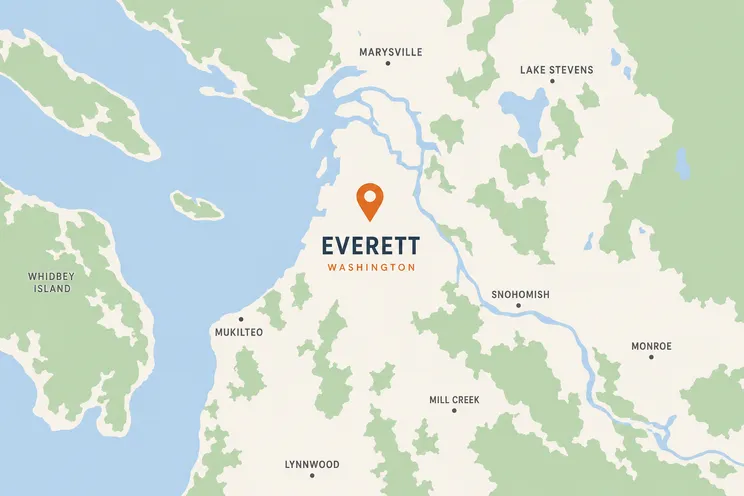


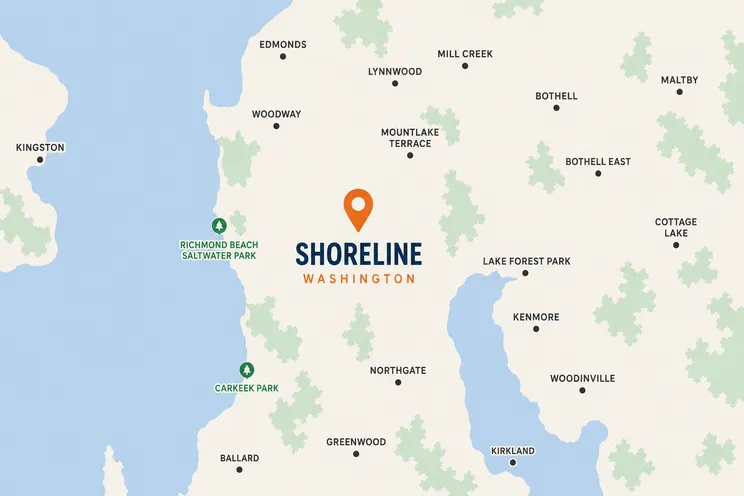


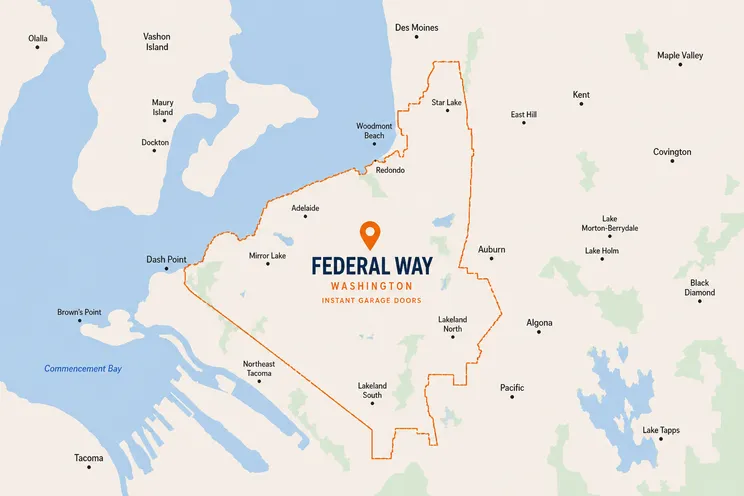

Our trucks carry the common parts, so a corroded cable or a worn roller is usually sorted in one visit. You get the price before we start.
01 Does salt air really reach inland, or only waterfront homes?
Onshore wind carries salt spray well inland. Homes several miles from the water still see faster corrosion than homes further east, though it is most pronounced close to the shoreline.
02 How often should I lubricate garage door hardware near the water?
Twice a year is a reasonable rhythm, more often if the door is used heavily. It takes about ten minutes and it is the most useful maintenance a homeowner can do themselves.
03 Can a rusty spring be cleaned rather than replaced?
Surface rust can be cleaned, but corrosion that has pitted the steel has already weakened it. A pitted spring should be replaced rather than treated.
04 Why not use WD-40 on garage door parts?
It is a solvent rather than a lubricant. It displaces moisture but strips existing lubricant and leaves the metal unprotected. Use a proper garage door lubricant instead.
Concerned About Corrosion on Your Garage Door?
Schedule a free inspection and get a straight answer on what needs attention
Serving the Puget Sound waterfront corridor from Everett to Tacoma. Available 24/7 for emergency service.