
Cold air is heavier than warm air. On a still night it sinks, and it collects at the lowest point it can find.
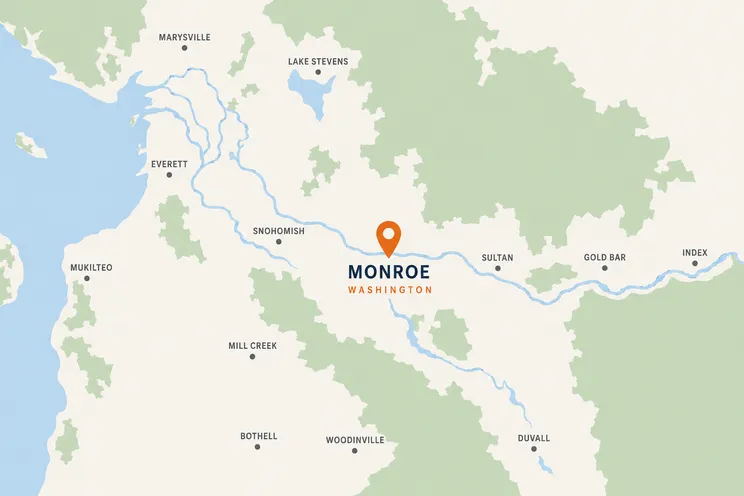
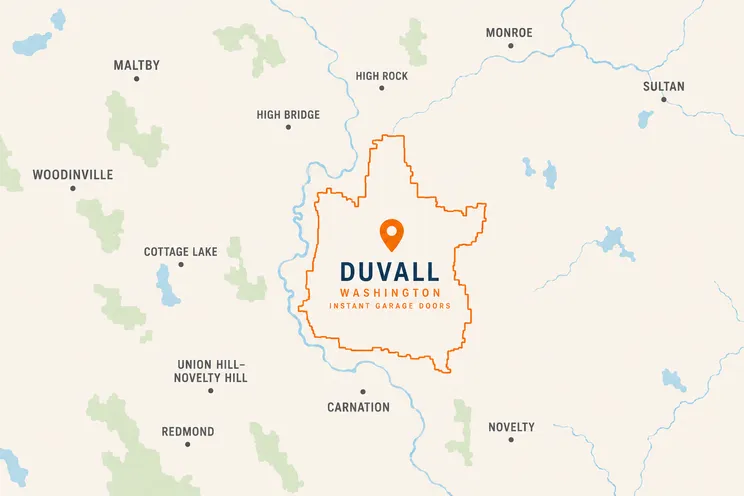
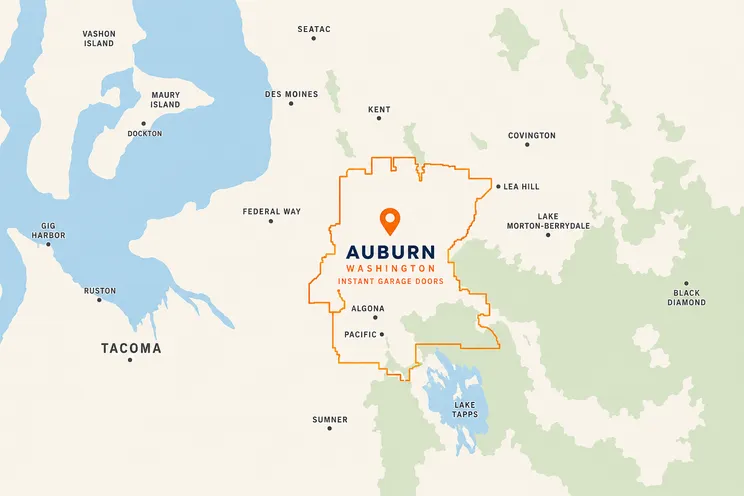
In this part of Washington, that means the river valleys. The Green River corridor through Kent and Auburn, the Snoqualmie Valley at Duvall, the Skykomish through Monroe and Sultan, the Puyallup River valley. Overnight, cold air pools on the valley floor while the hills above stay a few degrees warmer.
When that cold air meets the moisture already sitting over a river, you get fog. Not occasionally, but on most winter mornings, whether or not it has rained.
Why Fog Is Worse Than Rain
Rain is dramatic and it dries. Fog is quiet and it does not.
Fog leaves a fine film of moisture on every surface it touches, including the steel inside your garage. There is no run-off, nothing drips away. It just sits there. And because valley mornings stay cool and often still, that film can hang on the metal for hours before it evaporates.
Rust is a reaction between iron, oxygen and water. What matters is not how much water, but how long the metal stays wet. Fog that lingers every morning through the winter does more damage than a heavy shower that dries by noon.
Which Side of Town You Live on Matters
Auburn is the clearest example. The flat valley floor around downtown gives way to rising ground at Lea Hill and West Hill. Homes a mile apart sit in genuinely different conditions. Valley floor properties get the morning fog and the cold air pooling. The hillside homes above often do not.
The same split shows up in Kent, where the Green River corridor runs low and flat while East Hill sits well above it.
If your garage is on the valley floor near the river, the hardware inside it is working in a damper environment than a neighbour's a few streets uphill, and it will show it sooner.
Detached and Unheated Buildings Take the Worst of It
An attached garage borrows a little warmth from the house. Even an unheated one is buffered by a shared wall, and that small difference keeps condensation down.
A detached garage, a shop, or a barn gets none of that. It sits at outdoor temperature, and when damp air moves in, it stays damp. In Duvall especially, where a lot of properties have a shop or outbuilding as well as the house, we see hardware on detached buildings in noticeably worse condition than on the attached garage twenty feet away.
What Corrodes, and in What Order
Cables first. A garage door cable is braided steel. Moisture works into the gaps between the strands where you cannot see it, and the cable loses strength before it looks bad. Rust bloom or fraying on a cable means it is well past due.
Springs next. A torsion spring is under constant tension and it flexes every time the door moves. That flexing cracks whatever surface film is protecting it, exposing fresh metal to damp air. Corrosion creates small pits, and pits become the point where the spring eventually breaks.
Rollers and hinges. Joints trap moisture. Hinges between panels and the bearings inside rollers are enclosed spaces where damp sits and does not dry.
The bottom of the door. The lowest panel and the drainage channels along the bottom edge collect water and debris. Blocked channels hold water against the steel.
What You Will Notice
- Orange staining on the tracks, or on the wall and floor below them.
- A door that has become noisier over months rather than suddenly.
- White powdery deposits at hinge points, which is early corrosion before it turns orange.
- Paint bubbling on the lower panels, which means moisture is trapped underneath.
What Actually Helps
Lubricate twice a year. A garage door lubricant on rollers, hinges and the spring coils leaves a film that keeps moisture off the metal. This is the single most effective thing you can do, and it takes ten minutes. Do it going into autumn so the door enters fog season protected.
Avoid WD-40 for this. It is a solvent. It displaces moisture but strips the lubricant already there and leaves the metal bare.
Clear the bottom channels. Leaves and grit block the drainage along the bottom edge, which turns it into a trough. Sweep it out a couple of times a year.
Keep the bottom seal intact. A worn seal lets damp air under the door and holds it there. It is a cheap part and replacing it changes the environment inside the garage.
Ventilate if you can. A detached shop with no airflow holds damp air for days. If it has a window or a vent, using it on drier days makes a real difference.
Look at the cables once a year. Door closed, stand inside, look at the cable down each side. Smooth, tight and uniform is what you want. Fraying, kinks, slack or rust means get it looked at.
When to Call
A frayed or rusty cable is not something to wait on. Cables are under load, and when one goes the door drops on that side.
A spring with visible pitting has already lost strength, whatever its age.
A door that has got noticeably heavier to lift by hand means something in the system is fighting you.
We work the valleys from Marysville and Monroe in the north, through Sultan and Duvall, down the Green River through Kent and Auburn to Puyallup. Our trucks carry the common parts, so most jobs are done in one visit, and you get the price before we start.
When fog-season corrosion has gone too far, Instant Garage Door Repair can replace worn parts, often the same day. Valley homeowners share their experience.




01 Why is my garage door rusting when it never gets rained on?
Fog is the usual answer. It leaves a film of moisture on metal that sits there for hours rather than running off. On the valley floor that happens most winter mornings, which is more damaging over time than occasional heavy rain.
02 Does a detached garage really corrode faster than an attached one?
It has no warmth from the house buffering it, so it sits at outdoor temperature and holds damp air longer. Hardware in detached shops and outbuildings generally shows corrosion sooner than hardware on an attached garage at the same address.
03 What is the white powder on my garage door hinges?
It is early stage corrosion, before it turns orange. It means moisture is sitting in that joint and it is worth cleaning and lubricating before it progresses.
04 How often should I lubricate garage door hardware in a damp area?
Twice a year, and time one of those for autumn so the door goes into fog season with a fresh protective film on the moving parts.
Concerned About Rust on Your Garage Hardware?
Schedule an inspection before corrosion leads to a cable or spring failure
Serving the valley floor from Marysville to Puyallup. Available 24/7 for emergency service.